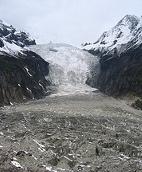


Up close, the sound of global warming at the face of the Urumqi No1 Glacier is a simple, steady drip, drip, drip. Just 30 metres from the main wall, the flood of meltwater becomes so powerful that it cuts a tunnel under the floor of grey ice, leaving only a blotchy, wafer-thin crust on the surface. [See Guardian video here.]
Compared with the collapse of ice shelves in the Antarctic, the melting of the mountains in China's far west is one of the less spectacular phenomena of global warming, but it is a more immediate cause of concern and hope.
There is concern because this glacier — more than almost any other in China — is a natural water regulator for millions of people downstream in the far western region of Xinjiang. In winter, it stores up snow and ice. In summer, it releases meltwater to provide drinking and irrigation supplies to one of the country's most arid regions. It brings hope because its rapid shrinkage is helping to set off climate-change alarm bells in a country that emits more greenhouse gases than any other.
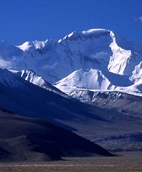
The Urumqi No1 Glacier is so named because it was the first ice field to be measured in China. Since 1953, scientists have been monitoring its thickness and length, analysing traces of pollution and tracking changes in temperature at this 3,800-metre altitude. The results leave no room for doubt that this part of the Tian (Heaven) mountain range is melting.
According to China’s Cold and Arid Regions Environmental and Engineering Research Institute (CAREERI), the glacier has lost more than 20% of its volume since 1962 as the temperature has increased by almost 1° Celsius (33.8° Fahrenheit). And the rate of shrinkage is accelerating. For the first time last year, it was so warm in the summer that rain rather than snow fell on the glacier. A lake formed on the top of the ice field, which is retreating at the rate of nine metres a year.
Locals have noticed the ice diminish. Ashengbieke is a guide who takes tourists up the rocky path to the ice field by motorbike. Since his childhood, the 18-year-old guide says, the glacier has split in half.
"While I was growing up, it used to be very cold here,” he says. “It used to snow in summer, but now it rains instead. Because of the air pollution, the glacier turned black. It used to be pure white and the two snow fields were joined as one."
Bahabieke, a nomad from the Kazakh ethnic group, is erecting his yurt – his portable dwelling — a week earlier than last year. "It has become warmer, especially these last two years," he says.
"It's very frightening," according to meteorologist Zhang Enzi. "That is because it is related to the issue of water supply. It will have an impact on people in the future."
There are few places in the world where the cause and effect of global warming are so closely juxtaposed. An hour's drive from the glacier, the road passes coal-fired power plants and factories that belch carbon dioxide and sulphur dioxide into the sky. They were built during the Cultural Revolution, when Mao Zedong ordered industry to be shifted into remote areas of the countryside so that it would be harder to target in the event of a war with the Soviet Union.
This "Third Front" policy is now viewed as an environmental disaster. A senior engineer at the Houxia concrete plant says the factory will close within three years because the government recognises the need to reduce emissions and pollution.
He says China is ready to play a part in solving a global problem. "We realise the problems of industrialisation and we don't want to grow at the expense of human health and an unsustainable use of natural resources," says the engineer.