Nobuo Tanaka, executive director of the International Energy Agency (IEA), is a global authority on energy. The organisation that he leads provides energy policy advice to 28 countries in the developed world. So, when Tanaka recently said, “we can no longer expect low energy prices” and that addressing climate change requires a “paradigm shift” in energy production, it was clear that the energy outlook is changing.
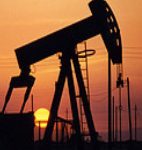
At the heart of this change is oil. The IEA was formed in response to the first oil crisis in 1973. Tanaka was part of the Japanese delegation during the second oil shock in 1979. Speaking in September at the Asia-Europe Environment Forum in Dublin, Ireland, Tanaka said we are living through the third oil shock: a period characterised by "tight markets" and increasingly volatile oil prices. Strong growth in demand for oil, upstream bottlenecks, a lack of spare capacity and a changing political scene all compound the situation.
Global spending on oil as a percentage of gross domestic product is now reaching the same high levels of the second oil shock. In the long term, the outlook remains the same: oil prices will remain high. However, China and other Asian countries are facing these pressures for the first time. Due to historically low demand, they were insulated from previous oil shocks. The situation is compounded by government oil subsidies in China and India.
Tanaka believes, however, that with adversity comes opportunity. The third oil shock will drive the innovation needed to tackle the other great challenge of our time: reducing emissions of greenhouse gases in order to mitigate climate change. High oil prices have already spurred increased investment in renewable energy technologies; Tanaka said we are seeing “increased investment into solar photovoltaic research” and the “development of second generation biofuels.” He cited the decreasing use of sports utilities vehicles (SUVs) and the increasing numbers of people on public transport in the United States as an example of the oil price driving behavioural change. In the long-term, high prices may lead not only to more efficient uses of energy, but outright “demand destruction” as societies rationalise and individuals change their lifestyles.
Tanaka is enthusiastic about the opportunities for change in energy systems beyond IEA member states. “Japan and Europe have certainly created a very efficient system after the first and second oil shocks. Now it’s time for China or India to move into a totally new system. China definitely has a very good opportunity to show a green or sustainable model of economic growth in the future. The third oil shock is an opportunity to move into much, much more efficient energy systems.” But to achieve energy efficiency, Tanaka recommended these countries start by phasing out oil subsidies. “[Oil] demand is responding in countries like the United States and Europe, while in countries like China, India, in ASEAN or the Middle East, the demand is still moving up. For the sake of energy efficiency and conservation we need to make the market function better in these countries. The market signal must go straight to the consumer.”
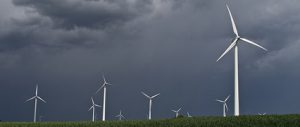
The Group of Eight (G8) goal of a 50% reduction in carbon dioxide emissions by 2050 is a target that the IEA takes seriously, Tanaka said. He stressed that the goal is achievable, but a “paradigm shift” in energy production is necessary in order to meet it. “Fifty per cent [of global energy] must come from renewables”, he said. “Whole electric power sectors must be de-carbonised.”
The agency recently released a report detailing how its member states can hasten their transition to renewables. The study said high costs are obstructing the process and recommends governments do more to remove non-economic barriers and design more appropriate incentives. Policy, in general, should become more predictable, transparent and stable. Tanaka also acknowledges the need to put a price on carbon and that this will likely push the price of traditional, carbon-intensive forms of energy even higher.
De-carbonisation, Tanaka said, will also mean embracing technologies, including nuclear energy, that have some negative environmental impacts. Tanaka argued that globally, “about a quarter of electric generation should come from nuclear. But to make it possible we have to build 32 nuclear reactors a year between now and to 2050 – a huge challenge.” He also predicted that carbon capture and storage will play an important role.
In Tanaka's view, we must still rely, to some extent, on fossil fuels. He argued for a “balance” between environmental concerns and the need to tap oil reserves. He warned against ruling out energy resources in Canada's tar sands, the Alaskan wilderness or off-shore oilfields, even though these forms of exploration will have negative impacts on ecosystems. Tanaka sees a problem if countries like the United States seek to protect their own environment, while seeking increased oil production elsewhere. “If the US is not really engaging in production expansion, how could you ask others to produce more or explore more?”
Tanaka talks of “energy revolution” and lifestyle change, but many of the solutions he proposes are surprisingly conventional. Can the change needed to tackle global warming occur while countries continue to rely on energy derived from fossil fuels and nuclear fission, as he recommends? The challenge we face may in fact be larger than any oil shock. Perhaps even an august multilateral institution like the IEA lacks the necessary scope and imagination to chart a course through this truly global crisis.
Tan Copsey is development manager at chinadialogue
Homepage photo copyright OECD/IEA, 2008