Picture an elephant in the wild, making its stately progress across the savannah, tall grass bending beneath its feet. Now transplant that image to the American prairie. In one of the most startling new ideas to emerge about climate change, a leading conservation biologist is calling for plants and wildlife facing extinction to be saved simply by picking them up and moving them.
Camille Parmesan, a butterfly biologist at the University of Texas at Austin, has been monitoring the effects of rapid climate change on species – particularly those threatened because they cannot adapt to or escape from rising temperatures – for more than a decade now. But her idea for a modern-day Noah’s ark remains hugely controversial.
“The idea is that, for certain species at very high risk of extinction due to climate change, we should actively pick them up and move them to suitable locations that are outside their historic range,” she tells me in her office at the university campus, near the biology laboratory in which she and her husband keep myriad caterpillar samples in the cold store.
Her proposals, once confined to a handful of scientists, are now getting a broader airing as governments begin to grapple with the enormous problem of how to insulate animal and plant life from a warming climate. Shortly after appearing inThe Atlantic magazine’s list of “brave thinkers”, Parmesan lobbied negotiators, environmental activists and scientists at last December’s climate-change summit in Copenhagen to start drawing up plans to move animals that are most at risk.
She is, not surprisingly, frustrated and angry with the failure of governments to cut the emissions that cause climate change. After the subsequent discovery of a false claim about melting Himalayan glaciers by the UN’s climate body the IPCC, Parmesan also stresses that conservationists should not fall into a pattern of reflexively blaming climate change for each and every decline in wildlife. However, she remains convinced of the dangers to the world’s animals from a rapidly warming atmosphere.
Scientists have long believed that 20% to 30% of all known species of land animal, bird and fish could become extinct because of climate change. But recent studies, based on more elevated temperature projections, have suggested an even greater rate of die-off – 40% to 70% – as heatwaves, drought and the increasing acidification of the oceans drive animals from their native habitats and destroy their food supply.
The sheer scale of threatened extinctions has forced conservationists to rethink what was once dismissed as an outlandish notion. And it’s got Parmesan thinking about elephants …
To date, there is little evidence about how climate change – rather than traditional threats such as poaching or growing urbanisation – is affecting the grasslands where these majestic creatures live in the wild. “But at some point, I think we might want to think about moving them around,” Parmesan says.
She has already been pushing for efforts to regenerate America’s prairie grasslands in parts of Texas and the US Midwest, by bringing in big grazing animals. There are fossils to suggest there were elephants in North America tens of thousands of years ago. So why not transplant African elephants to North America?
“With climate change, I am starting to think that, if we do get a massive reduction of Africa’s grassland, then as I am advocating restoration of the US prairie anyway, we can use the large herbivores from Africa to help that process because they are already co-adapted [or mutually accommodating]. I wouldn’t be opposed to that.”
Parmesan can see her way to moving other big herbivores too, such as giraffes. She can even justify finding new homes for pandas. However, she concedes that most of the planet’s iconic large animals would still have to find their own way out from climate change – it would be impractical to move carnivores, for example.
“What we are advocating is not moving tigers to Africa, nor moving polar bears to Antarctica – nothing as dramatic as that – but [on the whole] to take species that are fairly innocuous, including a lot of plants and insects,” she says. “We know enough about their competitive abilities and their behaviour, and we have no expectation that they are going to be able to take over an ecosystem.”
Climate studies since 2000 reveal a growing threat to animal life far beyond the polar regions that have been feeling its early impacts. A review of recent scientific literature showed 52% of species striking out for more temperate areas as their traditional habitats became unsuitable, migrating from 50 kilometres to as far as 1,600 kilometres away when geography and human settlements allowed.
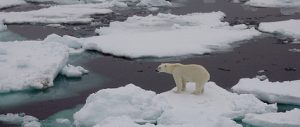
Climate change is also altering their way of life: some 62% of species, for example, are mating earlier in the spring. The studies noted huge varieties in response to climate change except for one fatal trait: no species was exhibiting the kind of large-scale evolutionary changes needed to adapt to warming temperatures in its existing habitat. “Evolution is not going to save the polar bear,” says Parmesan simply.
If it were up to her, the evacuation would start now – perhaps with a variety of the ephemeral Checkerspot butterfly that started her on this unlikely career path. Now 48, she did not set out to become a campaigner – or even a lepidopterist, for that matter. The youngest (and smallest) of six daughters, she grew up in a solidly Republican family with deep roots in the Texas oil industry. Her mother, a geologist, worked for an oil company, as does one of her sisters.
Initially, Parmesan wanted to study primates, but she did not have the stomach to work with caged animals. She claims she is uncomfortable even describing herself as an environmentalist – although she does drive a blue Prius, and watches her carbon footprint.
It was fieldwork that set Parmesan on her more public trajectory, after she published her first paper on the plight of Edith’s Checkerspot. In the early 1990s, she spent more than four years rattling across the Pacific Northwest in an old Toyota pickup truck, tracking these butterflies from Mexico to Alberta.
Earlier researchers – including her husband, Michael Singer – had established that the Checkerspot was sensitive to temperature. The trek convinced Parmesan that it was dying out because of climate change: rising temperatures in California were drying up the plant that was its main food source, although the butterfly continued to do fine in northern latitudes. And yet Parmesan admits she was, at first, sceptical about projections of the broader impacts of climate change on the animal world.
“I have to admit that 10 years ago, I thought they were a bit too extreme,” she says. But now she fears the scientific community is under-estimating the risk of extinction, and is frustrated with conservation organisations for failing to grasp the urgency of this situation.
When Parmesan first began talking about moving species, or “assisted colonisation”, at academic conferences, her fellow biologists erupted. They accused her of playing God; of tampering with nature in ways that carry enormous risk. They warned that her approach would set off a whole new chain of problems. How did Parmesan know the transplants would take to their new surroundings? How did she know they would not stage a hostile takeover, chasing out the native species?
“I was surprised at how angry people got – how emotional,” she says. “They were just horrified that I advocated playing God. They thought I was advocating an engineering approach to conservation.”
Which, Parmesan concedes, she is. But she argues that her approach may be the only way left to save some species whose escape routes are blocked by urban sprawl or punishing desert, or which cannot adapt in time.
Unlike traditional threats to wildlife, Parmesan says there is no prospect of recovery from climate change. Loss of habitat and poaching can be reversed, given enough money. Threatened animals can be coaxed back to healthy numbers – as in the case of the wolf in the Rocky Mountain West region of the United States. Degraded landscapes can be restored. But climate change is irreversible, at least on a human timescale. And besides, it’s not as if there hasn’t been transportation of animal or plant life in the past.
“It doesn’t make any sense to say it’s OK for the shipping industry and the transport industry to accidentally move stuff around, for the aquarium trade to move stuff around, for the garden trade to move stuff all over the place, but that it’s not OK for a conservation biologist who is desperately trying to save a species from extinction to move it 100 miles [about 160 kilometres]. Come on, we have mucked around with Earth to such a degree that I think it’s a ridiculous argument.”
In recent years, Parmesan and a handful of other scientists have begun work on a blueprint for moving plants and wildlife on the verge of extinction. She argues it would be far more effective to transplant entire communities of plants and animals, rather than a few token species.
“If we move individual species, it will just be: ‘Let’s save a few cool things for our grandkids.’ But if we can get people to think about it on a grander scale, it could save some significant percentage of species.”
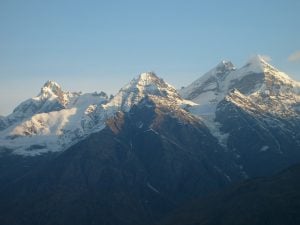
Their idea is to start small – with plants, butterflies, birds, small rodents, and mammals – and to restrict the relocation plan to isolated spots that are immediately threatened by climate change. That is, high-altitude species that are being forced to migrate higher and higher up mountains to find cooler temperatures. Parmesan would shift those populations to another, higher mountain within close range.
It is too soon to say if she is winning the argument. Her ideas are still considered outside the mainstream of conservationists, and undertaking any kind of mass animal rescue will require rewriting existing international laws on transporting animals, as well as huge infusions of cash. But some of the bigger wildlife NGOs are beginning to listen more seriously to what was seen only a decade ago as an outlandish idea.
“We need to have as many potential tools as possible in our tool boxes,” agrees Thomas Brooks of Conservation International. “It is not very easy and it is not very cheap, but I do see this as an option that needs to be explored when cheaper and easier options aren’t working. But this is a more difficult and expensive approach, and needs to be evaluated carefully in that light.”
Even with temperature rises of 0.7° Celsius [1.26° Fahrenheit], some animals have already been lost – such as the golden toad that lives in the cool mountains of Costa Rica. (Biologists there have warned that more than a dozen amphibian species have disappeared from the jungles because of climate change). And last year, researchers in Australia reported what would be the world’s first mammalian extinction of modern times: the lemuroid ringtail possum. These animals drop out of trees and die if the temperature rises above 30° Celsius [86° Fahrenheit] –although subsequent reports suggest a number have since been sighted.
Many other species are under a death sentence. In the American west, researchers have charted a sharp decline in the pika, a small, furry brown animal that lives in the Rocky Mountains. As for the polar bear, its natural hunting grounds are fast disappearing with the melting sea ice. Some studies suggest the Arctic’s summer sea ice could disappear entirely by 2020, and with it the seals that are the bears’ main food supply. Recently, Canadian biologists reported several cases of male polar bears eating their young because they were going hungry.
But while it’s too late for the polar bear, Parmesan believes there is a chance of saving other animals – provided governments and conservation organisations overcome their reservations and act now. “Otherwise, we are going to see a whole slew of species go extinct that we could have saved, if only we’d been willing to think a little bit more outside the box.”
Copyright Guardian News and Media Limited 2010
Homepage image by lensbug.chandru