The on-going US-China solar panel trade dispute is a setback for the hopes of an international agreement on reducing greenhouse gas emissions and tackling climate change, says a Chinese energy expert.
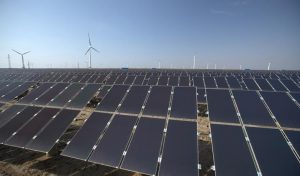
China’s solar panel industry has suffered over the past year with surplus in global supplies and a domestic industry that has expanded too fast. Renewable industry expert Li Junfeng told chinadialogue recently that he expected a large number of solar panel companies to go bankrupt.
The US blames government subsidies provided to Chinese firms for the glut of cheap solar panels flooding the market. Last week, it announced it would be imposing tariffs of around 15% on imports from solar products, to offset the subsidies.
The EU announced its own investigation into the dumping of Chinese solar panel products back in September, but has so far refused to impose similar import duties.
Speaking at a Chatham House debate in London this week, Professor Zhang Haibin, from the School of International Studies, Peking University, said the US import tariffs were "very bad" for climate negotiations between the world’s two biggest polluters.
"Trade and climate are interlinked and these tariffs are not a good sign for climate negotiations.
"It is a very conflicting message. On the one hand the US is encouraging China to formulate a renewable pathway and then they come out and say they are a threat. It’s sometimes difficult to know how to respond," said Haibin.