bullet
本周实情快递
Fact of the week

到2030年, 欧盟和中国80%的石油供给都将依赖进口。(来源:国际能源署)

Both the EU and China will import 80% of their oil supply by 2030. (Source: IEA)


文章
ARTICLES

RSS
RSS

变革大气候
Changing climates

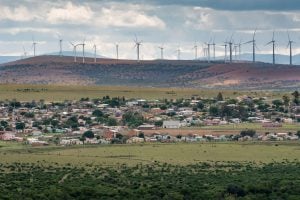
wind farm

Energy_climate

全球最大个体市场的欧盟和经济发展最快的国家中国在能源安全和气候变化问题上面临着相似的机遇和挑战。 这些领域未来几十年内出现的危险境地既不是欧洲也不是中国靠自身力量就能应对解决的。

"中外对话"和英国智库查塔姆研究所就这一议题达成了共识,并因此合作推出了"变革大气候"论坛。这一论坛致力于展现欧盟和中国就应对能源和气候安全挑战过程中存在的相互依赖和协作的潜力。

The European Union and China – respectively, the world’s largest single market and the fastest growing economy – share similar concerns regarding energy security and climate change. Facing mutual, interlinked challenges for decades to come, neither Europe nor China can respond on its own to the threats – and the opportunities – that will arise.

chinadialogue and the EU–China Interdependencies on Energy and Climate Security project at Chatham House have launched “Changing climates” to bring greater understanding of the interdependence and potential collaboration between the EU and China as they confront the energy and climate security challenges ahead. 

最新评论

Latest Comments

Original Posting Language Key
- 原始发表语言 original posting language
#

April 24, 2008 05:24

Two points

1. Gansu the next area for wind siting.

Here is an article (in English and Chinese) which highlights that the Chinese government is already focusing attention on publicising Gansu's potential wind resources:

2. I agree, we must ALL consider the implications of these models.

No one is excluded from thinking about what lessons can be learnt from these models, at any level or anywhere. This means people involved in market speculation in the US, too. Companies involved in clean tech might need to take a more globalised approach to production in order to make the most out of VC.

Posted in reply to Energy leapfrogging in China and India


2008年3月27日9:37

技术成本

我非常同意本文中提出的所有想法和意见,这真是在理智上的一大迈进!
中国的能源效率近几年的确提高了。在2006年,中国已经开始着手于像'1000强企业'的方案,也就是在中国的大企业中提高能源效率,同时淘汰小型,低效能的发电厂,其中包括'到2010年2亿5千万吨过期水泥能力'(刘易斯, 2007 )。

中国的水泥工业,消耗了约5 %的商业能源,但同时也是一个提高效益的典范。但是用这种举措来调整该国的工业结构以提高其能源效率是不尽合理的.这是因为,它意味着中国将重点放在由新的大型/高效但排放更多温室气体的电厂来取代小型/低效的电厂上。事实上,中国每十天就在建设一个新的燃煤发电厂!这种规模上不平衡的现象实在令人咂舌,究其原因,还是煤炭。

煤炭既是挑战,也是我们未来的能源。清洁煤的成本是非常昂贵的。推行一项减少和消除煤的污染(储存而非排放二氧化碳)的政策要消耗30-40 %的能源。从中国的角度来看,在这项技术上的投资对财政上带来不了什么收益,因为中国希望从煤炭加工中尽可能地获取高能源,但如果需要花费很大能耗使之成为清洁能源,那么中国经济将如何发展?中国蛙跳式发展究竟能走多远?

所以这里探讨的就是技术成本问题。而且煤的价格低廉,储量丰富也是很诱人的。虽然中国政府正在推动清洁电力,然而洁净燃料在中国并没有得到充分利用,因为它们的成本是很昂贵的。当煤炭的替代品如石油和天然气用完时,煤炭的储量仍将很丰富。假设中国的能效能达百分之百,中国仍将极有可能继续使用煤。

杰西卡 马西亚斯 博沙泰南 安普敦大学,英国。

Posted in reply to 中国:低碳经济的赢家

March 27, 2008 09:37

Technology cost

I appreciate all these thoughts and ideas, what are great way to intellectually move forward!

It is true that China’s energy efficiency has improved in recent years. China has embarked on programmes like ‘Top 1000 Enterprises’ in 2006, to improve energy efficiency in China’s largest enterprises and eliminating small, inefficient power plants, including ‘250 million tonnes in outdated cement capacity by 2010’ (Lewis, 2007). China's cement industry, which consumes about 5% of all commercial energy, is also a good example of efficiency gains.

However such action to adjust the country’s industrial structure is not entirely plausible in terms of increasing its energy efficiency. This is because it means that China is focusing on replacing small/inefficient to new large/efficient power plants that emit larger GHGs. In fact, China is building a new coal-fired power station every ten days! The magnitude of that imbalance is staggering and the reason for this is coal. Coal is the challenge and the energy of our future.

And leaning coal is very costly. Pursuing a policy of reducing and sequestering coal (burying CO2 rather than emitting it) would take 30-40% of energy. From the Chinese perspective, there is little financial incentive to invest in such technology because China wants as much energy from processing coal, and if it takes much energy to clean it, how does this develop the Chinese economy? How far will leapfrogging take China? The question to pursue here is therefore on technology cost. Coal's low price and its abundance have been such powerful incentive, too. Although Chinese authorities are pushing for cleaner power, clean alternatives in China aren't fully utilized because they are expensive. When alternatives like oil and gas will run out, coal will remain abundant. Suppose China had 100% of efficiency in terms of intensity, China will most likely continue to use coal.

Jessica Macias Bochatay
University of Southampton, UK.

Posted in reply to China: winner in a low-carbon economy


1 2 3 4


EU–China Interdependencies on Energy and Climate Security (英国智库查塔姆研究所)

E3G

Chinese Academy of Social Sciences (中国社会科学院)

Energy Research Institute (中国能源研究所)

Institute for Sustainable Development and International Relations (
可持续发展和国际关系研究所)

Potsdam Institute for Climate Impact Research (
波茨坦气候影响研究所)